
- Arrest Records
- Judgments
- Bankruptcies
- DUIs & DWIs
- Felonies
- Warrants
- Jail Records
- Lien Records
- Sex Offenses
- Misdemeanors
- Criminal Records
- Federal Dockets
What are Missouri Court Records?
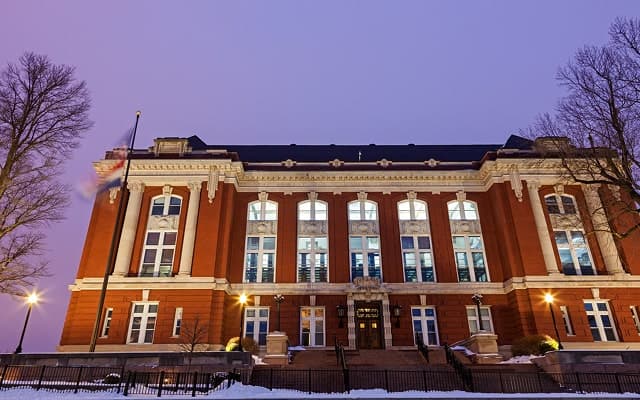
Missouri is the 18th most populous state in the US, with over 6.25 million residents. The state operates under a unified court system comprising three main levels: the Missouri Supreme Court, the Missouri Court of Appeals, and the Circuit Courts. The Circuit Courts serve as the primary trial courts and handle a wide range of cases, including civil, criminal, probate, juvenile, and traffic matters.
Court records generated from these cases include documents filed and produced throughout the legal process. Civil proceedings usually begin with a petition or complaint, while criminal proceedings usually start with an indictment or criminal complaint. These records may include the following:
Docket Sheet
A summary document that lists the parties involved, attorneys of record, the presiding judge, and a chronological log of all filings, motions, hearings, and court orders in the case.
Judgments and Orders
These are decisions issued by the court. A final judgment outlines the outcome of the case, including the prevailing party and any penalties, remedies, or directives ordered by the judge.
Transcripts
These are verbatim records of courtroom proceedings, prepared by official court reporters upon request. Transcripts are commonly used in appeals or post-conviction proceedings and are not automatically created for all cases.
Evidence
This includes physical and documentary materials submitted during the trial, such as police reports, photos, or written records, introduced by either the prosecution or the defense.
Court Minutes
A brief summary of events during a court session, including start and end times, appearances, statements, testimony, and motions addressed during the hearing.
Pleadings
Formal written statements that present each party's claims, defenses, and legal arguments. These include
Briefs
These are legal documents submitted by attorneys to support their positions. These documents often include citations to state statutes, case law, and procedural rules to persuade the court in matters such as motions or appeals.
Types of Court Cases
In Missouri, court cases fall into two main categories: civil and criminal. While both seek to resolve legal disputes, they differ significantly in terms of purpose, legal procedures, burdens of proof, and possible outcomes.
Civil Cases
Civil cases involve disputes between private individuals, businesses, or organizations. Unlike criminal cases, civil litigation seeks monetary compensation or equitable relief (such as injunctions or court orders).
In Missouri, civil cases are heard in the Circuit Courts, which have divisions for family law, probate, small claims, and general civil matters. Legal representation in civil matters is not guaranteed, and parties may hire an attorney or represent themselves (pro se). The burden of proof in a civil case is a preponderance of the evidence, meaning it must be more likely than not that the plaintiff's claims are true.
Common examples of civil cases include:
- Family Law: Divorce, child custody, child support, visitation disputes.
- Property Disputes: Boundary disagreements, landlord-tenant issues, real estate claims.
- Contracts and Torts: Breach of contract, negligence, personal injury claims, defamation.
- Probate and Estate Matters: Wills, guardianships, estate administration.
- Bankruptcy Filings
Since civil cases do not involve the government prosecuting a defendant, they cannot result in imprisonment. Instead, remedies are usually monetary or equitable.
Criminal Cases
Criminal cases are prosecuted by the state, typically through the office of a county prosecuting attorney or circuit attorney in larger jurisdictions. These cases allege violations of Missouri's criminal statutes and are pursued in the name of "The State of Missouri."
The goal of criminal prosecution is to enforce the law, ensure public safety, and penalize unlawful behavior. Defendants in criminal cases have the right to legal counsel, and if they cannot afford one, the court will appoint a public defender. The burden of proof is on the prosecution, which must prove the defendant's guilt beyond a reasonable doubt. In felony cases, a unanimous jury verdict is required for conviction. If the jury cannot reach a verdict, the judge may declare a mistrial, and the prosecution may retry the case.
Common types of criminal cases include:
- Violent Crimes: Murder, manslaughter, assault, and robbery.
- Domestic Violence: Including physical abuse, stalking, and violations of protection orders.
- Property Crimes: Burglary, theft, arson, and vandalism.
- Drug Offenses: Possession, trafficking, and distribution of controlled substances.
- Driving Offenses: Driving while intoxicated (DWI), driving under the influence (DUI), and driving with a suspended license.
Convictions in criminal court can result in penalties such as incarceration (jail or prison), probation, community service, restitution, fines, or loss of civil rights, including firearm possession or voting rights in certain cases
What Are the Different Courts in Missouri?
Missouri has a three-tier court system made up of the Supreme Court, a Court of Appeals divided into three districts, and circuit courts in 46 judicial circuits that hear cases through specialized divisions. The Judiciary's FY 2026 appropriation totals less than 2% of the state's General Revenue, and circuit court personnel alone are budgeted at about $196 million.
| Court Level | Court Name | Jurisdiction | Key Functions |
|---|---|---|---|
| Appellate | Supreme Court | Highest court; statewide appeals | Final appeals, constitutional challenges, and administration of the court system |
| Appellate | Court of Appeals | Western, Eastern, and Southern districts | Reviews civil and criminal appeals from the circuit courts |
| General Jurisdiction | Circuit Court (Circuit Division) | Felony criminal cases and civil cases without a dollar limit | Jury trials, civil and criminal matters, and appeals from lower divisions |
| General Jurisdiction | Circuit Court (Family, Juvenile, and Probate Divisions) | Domestic relations, juvenile, and estate matters | Divorce, custody, child welfare, delinquency, wills, and guardianships |
| Limited Jurisdiction | Circuit Court (Associate Circuit Division) | Misdemeanors, preliminary felony hearings, and civil cases up to $25,000 | Traffic and criminal matters, civil suits, and small claims up to $5,000 |
| Limited Jurisdiction | Municipal Division | City ordinance and municipal traffic violations | Resolves traffic and ordinance cases at the city level |
How Many Federal Courts Are in Missouri?

Missouri has two federal judicial districts. The United States District Court for the Eastern District of Missouri covers the eastern part of the state, including major cities such as St. Louis, Cape Girardeau, and Hannibal. The primary courthouse is located in St. Louis, with additional facilities serving other areas within the district. The United States District Court for the Western District of Missouri serves the western portion of the state, which includes Kansas City, Springfield, Jefferson City, and surrounding regions. Its main courthouses are in Kansas City (State of Missouri) and Springfield, providing access to federal courts across the western district.
These two district courts handle various federal cases, including criminal prosecutions, civil lawsuits involving federal laws, constitutional questions, and disputes between parties from different states (known as diversity jurisdiction). Each court is staffed by several judges, including district judges and magistrate judges, who preside over trials and other court proceedings.
In addition to the district courts, Missouri has corresponding United States Bankruptcy Courts for both the Eastern and Western districts. These courts exclusively handle bankruptcy cases and function as specialized units within the federal court system.
Appeals from the federal district courts in Missouri go to the United States Court of Appeals for the Eighth Circuit.
How Many Court Cases Are Filed Each Year in Missouri?
Missouri circuit and municipal divisions recorded about 1.35 million new cases in fiscal year 2023, with an overall clearance rate of about 104%. Counts below avoid double counting felony complaints and transferred municipal cases, and the small claims and civil split is estimated.
| Case Type | Annual Filings | % of Total | Common Offense/Subtype | Clearance Rate |
|---|---|---|---|---|
| Traffic | 675,505 | 50.1% | Speeding, other moving violations, and alcohol or drug related traffic offenses | 108% |
| Criminal | 303,582 | 22.5% | Felonies, misdemeanors, and city or county ordinance violations | 105% |
| Civil | ~211,600 | ~15.7% | Contract and debt suits, landlord-tenant cases, and tort claims | ~97% |
| Small Claims | ~5,950 | ~0.4% | Claims up to $5,000 such as unpaid bills and property disputes | ~98% |
| Domestic Relations | 91,278 | 6.8% | Divorce, custody, child support, and modification actions | 102% |
| Juvenile | 14,372 | 1.1% | Delinquency, status offenses, and child abuse and neglect | 96% |
| Other | 45,304 | 3.4% | Decedents' estates, guardianships, conservatorships, and mental health petitions | 96% |
| Total | 1,347,583 | 100% | — | 104% |
How Do I Look Up Court Cases in Missouri?

Court records in the state are maintained by the court where the case was originally filed. For cases that have been appealed, documents can typically be found through the Missouri Court of Appeals or the Missouri Supreme Court.
The most convenient way to search for court cases online is through the Missouri Case.net system, the state's official online case management and public access portal. Case.net allows users to search by case number or party name and provides access to civil, criminal, family, probate, traffic, and other case types. However, certain records or documents may be restricted or unavailable online due to confidentiality rules.
It is important to note that not all counties may have the same level of online availability. For counties or cases not fully accessible online, or if you need certified or physical copies of records, you can contact the clerk of the circuit court in the county where the case was filed.
Requests can be made in person, by mail, or sometimes by phone or email, depending on the county. Mail requests usually require a completed request form, payment of copy fees, and a self-addressed stamped envelope. Fees typically vary by county but often cost around $1 per page for copies, with additional certification fees. Requests for exemplified copies, transcripts, or other special documents may incur higher fees and longer processing times.
For older or archived cases, files may be stored off-site, which can cause delays in retrieval. You may contact the circuit court clerk in advance to learn about any special procedures or expected wait times for accessing archived records.
Number of Active Judges — State & Federal
Missouri's state judges serve on the Supreme Court, the Court of Appeals, and the circuit courts, while federal judges sit in the Eastern and Western Districts, two of whom serve both districts. Circuit judge counts are derived from the Judiciary's FY 2026 budget and part-time municipal judges are not included.
| Court | Jurisdiction | Active Judges | Selection Method |
|---|---|---|---|
| Supreme Court | Highest appellate court statewide | 7 | Appointed by the Governor from a nonpartisan commission list, then subject to retention elections for 12-year terms |
| Court of Appeals | Intermediate appellate court in three districts | 32 | Appointed by the Governor from a nonpartisan commission list, then subject to retention elections for 12-year terms |
| Circuit Court (Circuit Judges) | General jurisdiction trial court in 46 circuits | ~153 | Nonpartisan court plan in St. Louis, Jackson, Clay, Platte, and Greene counties; partisan election elsewhere for six-year terms |
| Circuit Court (Associate Circuit Judges) | Misdemeanors, small claims, and civil cases up to $25,000 | ~213 | Nonpartisan court plan in plan counties; partisan election elsewhere for four-year terms |
| U.S. District Court, Eastern District of Missouri | Federal civil and criminal cases in St. Louis, Cape Girardeau, and Hannibal, including two judges shared with the Western District | 9 | Nominated by the President and confirmed by the Senate, serving for life |
| U.S. District Court, Western District of Missouri | Federal civil and criminal cases in Kansas City, Springfield, St. Joseph, and Jefferson City, excluding the two shared judges | 5 | Nominated by the President and confirmed by the Senate, serving for life |
| Total Active Judges | — | ~419 | — |
What Court Records Are Not Available to the Public in Missouri?
In Missouri, not all court records are open for public inspection. Certain types of records are either sealed by law or protected by court order to protect privacy and sensitive information. Examples of non-public records include:
- Juvenile court proceedings
- Adoption records
- Mental health case files
- Child abuse investigations
- Grand jury materials
- Expunged or sealed criminal records
Any party involved in a case may petition the court to seal records if they show a compelling reason, such as protecting personal safety, confidential financial or medical information, or the privacy of minors.
Average Case Processing Time & Clearance Rates
Processing times in Missouri vary by case type, from weeks for traffic tickets to a year or more for contested civil cases. Times below are estimated from fiscal year 2022 time-standards performance, and clearance rates come from fiscal year 2023 court data.
| Case Type | Court Level | Average Processing Time | Description | Clearance Rate |
|---|---|---|---|---|
| Traffic & Parking | Limited Jurisdiction | ~1–3 months | Most tickets are resolved by fine payment or a plea, with contested cases set for a short hearing in municipal or associate court | 108% |
| Small Claims | Limited Jurisdiction | ~2–4 months | Informal hearings before an associate judge, with many cases ending in default, dismissal, or agreement | ~98% |
| Misdemeanor Criminal | Limited Jurisdiction | ~4–8 months | Arraignment and pretrial settings lead to a plea, dismissal, or bench trial in the associate division | 99% |
| Civil Cases | General Jurisdiction | ~12–24 months | Discovery and motion practice precede settlement, dismissal, or jury trial in the circuit division | 92% |
| Domestic Relations | General Jurisdiction | ~4–10 months | Uncontested divorces resolve by agreement, while contested custody and support cases require hearings or trial | 102% |
| Felony Criminal | General Jurisdiction | ~6–12 months | Associate division preliminary hearing, then circuit court arraignment and plea negotiation, with a minority tried to a jury | 104% |